Body Cameras, De‑Escalation, and “Proof You Can Defend”: The New Process-Server Safety Baseline
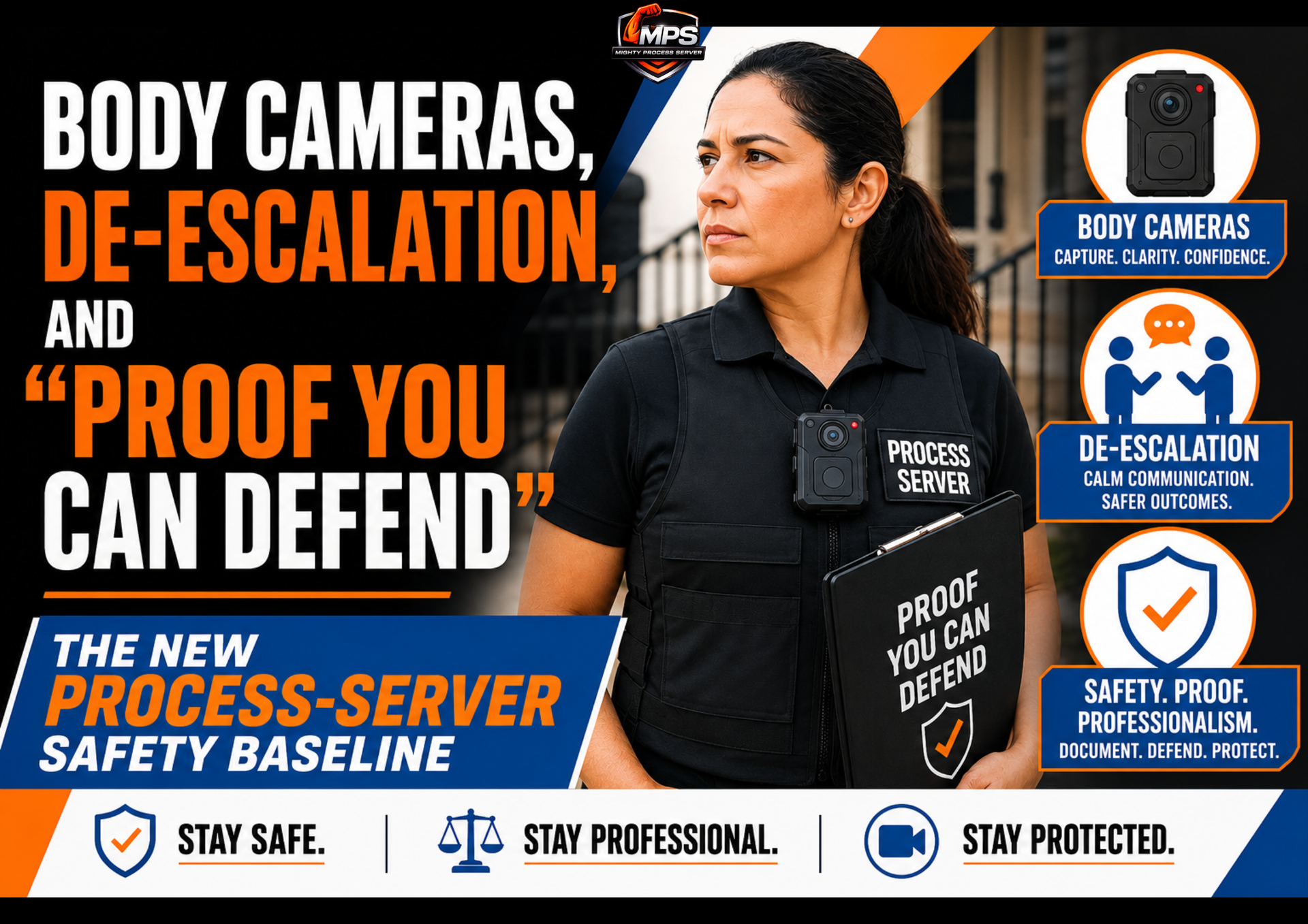
Safety conversations this week kept circling back to a simple reality: process servers are working in unpredictable environments and need a repeatable “serve-smart” system. Industry safety content is increasingly emphasizing body-worn cameras, pre-approach planning, and documentation so you can de-escalate (and defend yourself) when a routine serve turns hostile.
If there’s one theme that keeps coming up in safety discussions, it’s this: the work hasn’t gotten “safer,” but the tools and tactics for staying safe are getting clearer. More process servers are treating body‑worn cameras the way tradespeople treat PPE—standard gear that protects you physically and professionally. The goal isn’t to look tactical. The goal is to reduce uncertainty and create a clean record when a serve goes sideways.
A body camera changes behavior—yours and theirs. It forces you to slow down, narrate what you’re doing, and follow a consistent approach. That consistency matters because the legal story often gets written after the fact. A short clip showing your calm demeanor, your announcement, and the subject’s response can be the difference between a routine complaint and a career‑risking allegation.
Just as important: body cameras don’t replace good field craft. They support it. Your safety baseline should include a pre‑approach scan, an exit plan, and a “no hero” policy. If a scene feels unstable, back out. Re‑attempt with a safer plan. Document the reason. Then coordinate with the client or attorney. Safety is a workflow.
For teams, the operational play is to build a repeatable “serve-smart” checklist: gear check (camera, spare battery), address verification, daylight preference when possible, and a post‑attempt note template. If you run a platform like MightyProcessServer.com or your own branded system, you can build these prompts directly into your attempt logging.
Competitors like ServeManager, Crosstrax, and PST have made it easier to track attempts and notes—but safety documentation is the edge. In 2026, “I did the serve” isn’t enough. You need “I did the serve the right way, and I can prove it.”
Stay sharp. Stay informed. Live Mighty!
Read the full article at www.mightyprocessserver.com
This article is published by Process Server Daily, powered by
MightyAutomation.ai the leader in legal support intelligence.
Thousands of visitors come to Mighty Process Server each day looking to hire process servers like you. Join our network and start getting more clients today!
FOLLOW US
Youtube